
1)
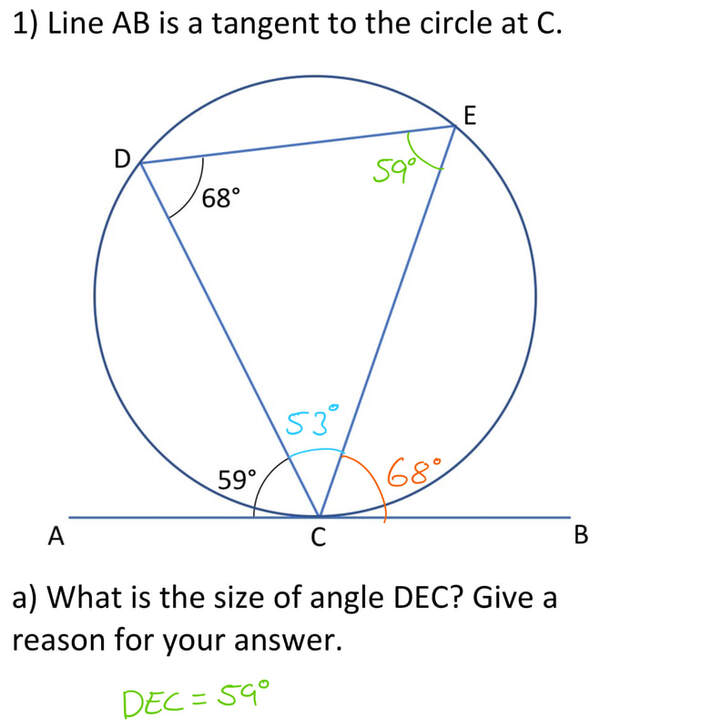
a) 59°
Reason: alternate segment theorem; the angle between a tangent and a chord is equal to the angle in the alternate segment.
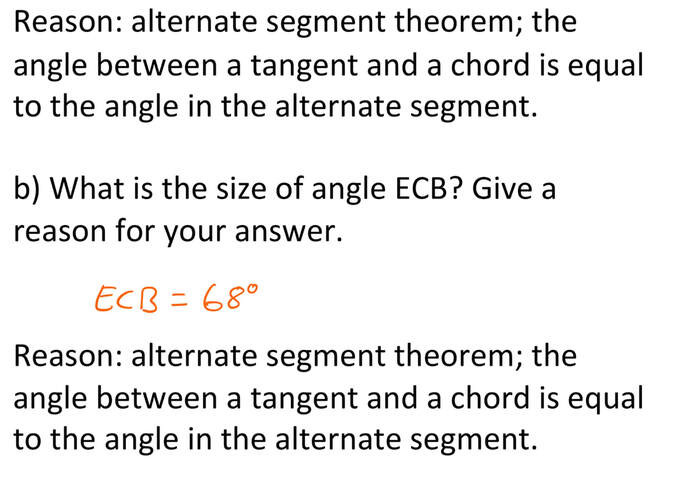
b) 68°
Reason: alternate segment theorem; the angle between a tangent and a chord is equal to the angle in the alternate segment.
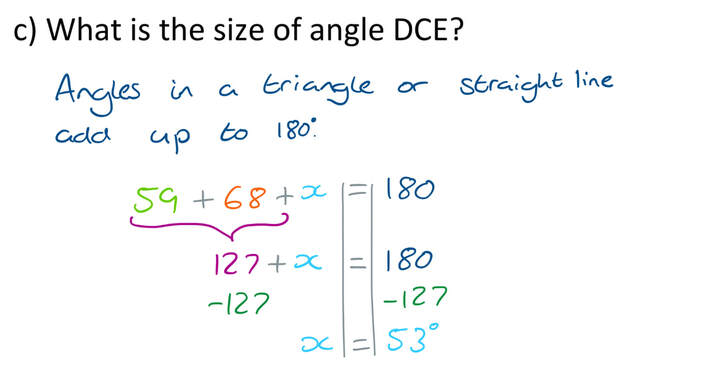
c) 53°
2)
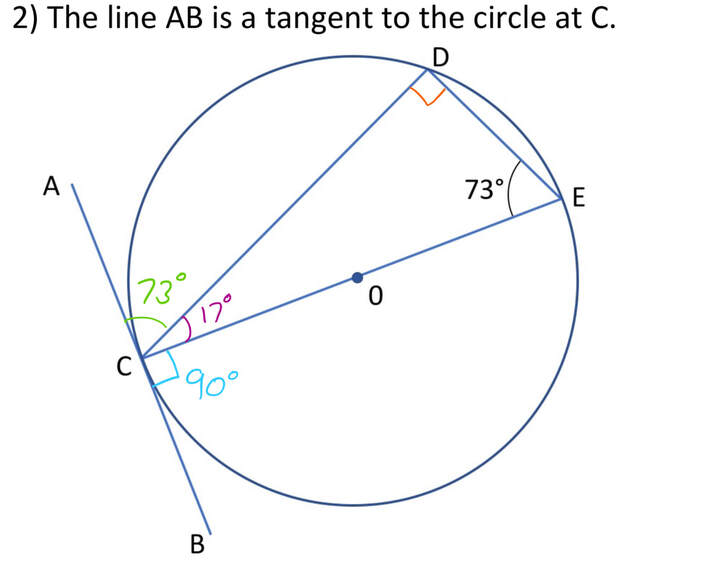
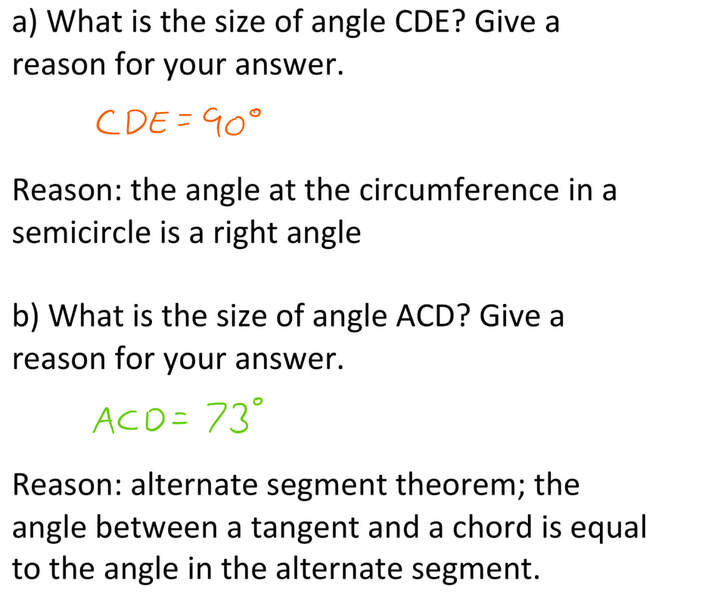
a) 90°
Reason: the angle at the circumference in a semicircle is a right angle
b) 73°
Reason: alternate segment theorem; the angle between a tangent and a chord is equal to the angle in the alternate segment.
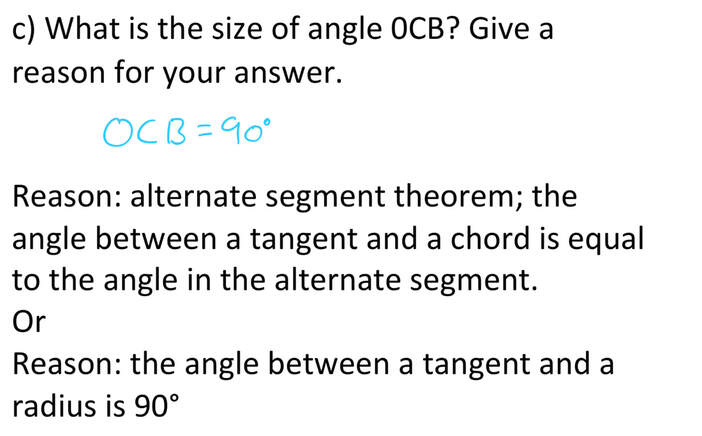
c) 90°
Reason: alternate segment theorem; the angle between a tangent and a chord is equal to the angle in the alternate segment.
Or
Reason: the angle between a tangent and a radius is 90°
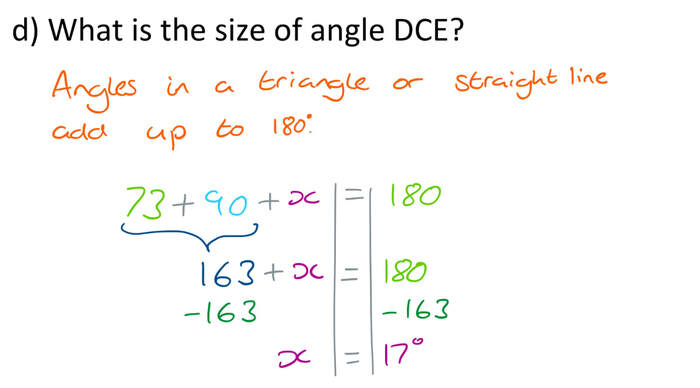
d) 17°
3)
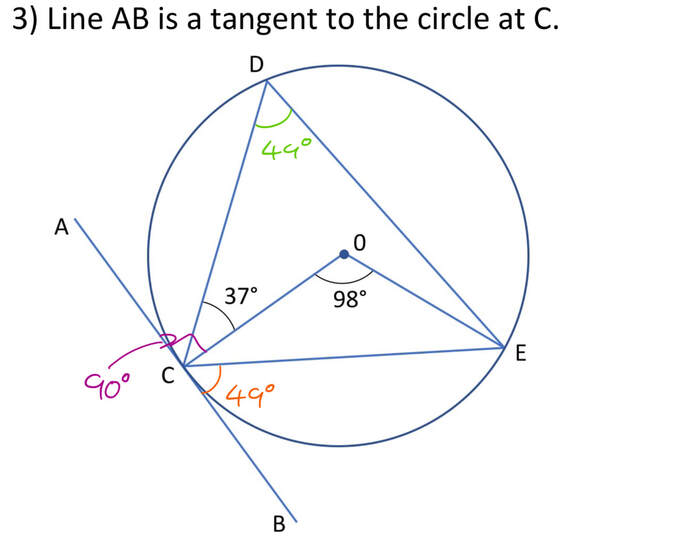
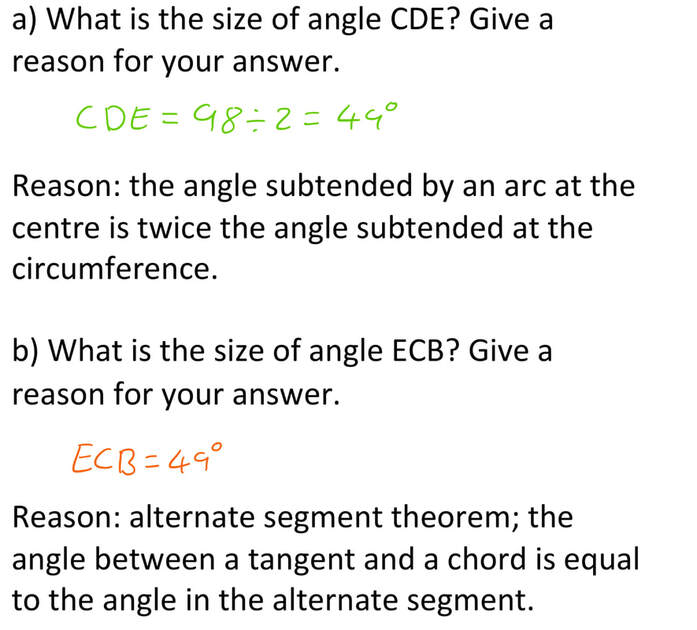
a) 49°
Reason: the angle subtended by an arc at the centre is twice the angle subtended at the circumference.
b) 49°
Reason: alternate segment theorem; the angle between a tangent and a chord is equal to the angle in the alternate segment.
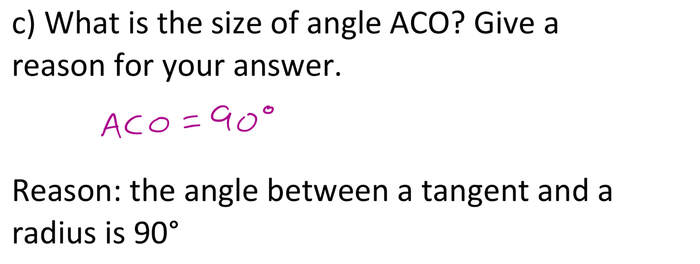
c) 90°
Reason: the angle between a tangent and a radius is 90°
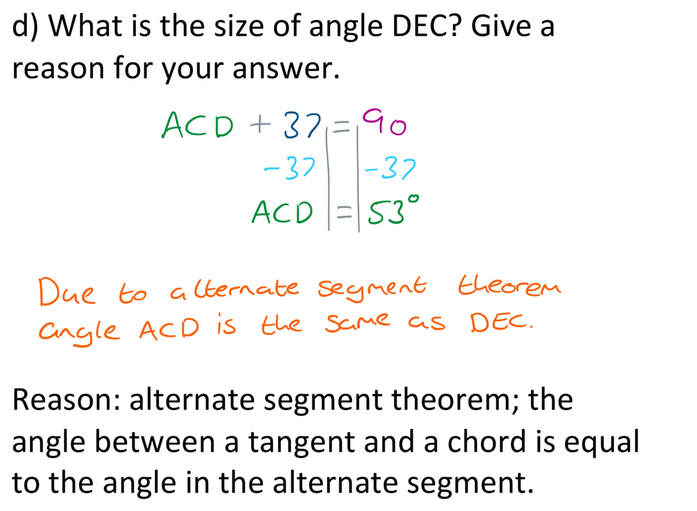
d) 53°
Reason: alternate segment theorem; the angle between a tangent and a chord is equal to the angle in the alternate segment.
a) 59°
Reason: alternate segment theorem; the angle between a tangent and a chord is equal to the angle in the alternate segment.
b) 68°
Reason: alternate segment theorem; the angle between a tangent and a chord is equal to the angle in the alternate segment.
c) 53°
2)
a) 90°
Reason: the angle at the circumference in a semicircle is a right angle
b) 73°
Reason: alternate segment theorem; the angle between a tangent and a chord is equal to the angle in the alternate segment.
c) 90°
Reason: alternate segment theorem; the angle between a tangent and a chord is equal to the angle in the alternate segment.
Or
Reason: the angle between a tangent and a radius is 90°
d) 17°
3)
a) 49°
Reason: the angle subtended by an arc at the centre is twice the angle subtended at the circumference.
b) 49°
Reason: alternate segment theorem; the angle between a tangent and a chord is equal to the angle in the alternate segment.
c) 90°
Reason: the angle between a tangent and a radius is 90°
d) 53°
Reason: alternate segment theorem; the angle between a tangent and a chord is equal to the angle in the alternate segment.
Working
Questions
You may use a calculator for the following questions. All of the diagram in the questions are not drawn to scale.
1) Line AB is a tangent to the circle at C.
You may use a calculator for the following questions. All of the diagram in the questions are not drawn to scale.
1) Line AB is a tangent to the circle at C.
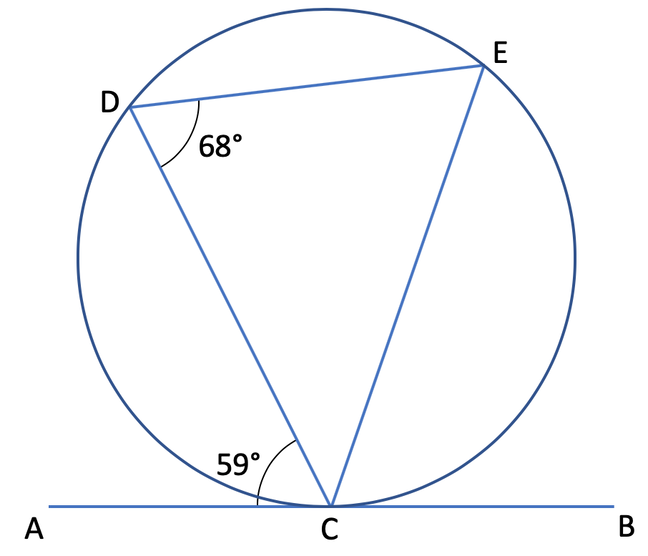
a) What is the size of angle DEC? Give a reason for your answer.
b) What is the size of angle ECB? Give a reason for your answer.
c) What is the size of angle DCE?
2) The line AB is a tangent to the circle at C.
b) What is the size of angle ECB? Give a reason for your answer.
c) What is the size of angle DCE?
2) The line AB is a tangent to the circle at C.
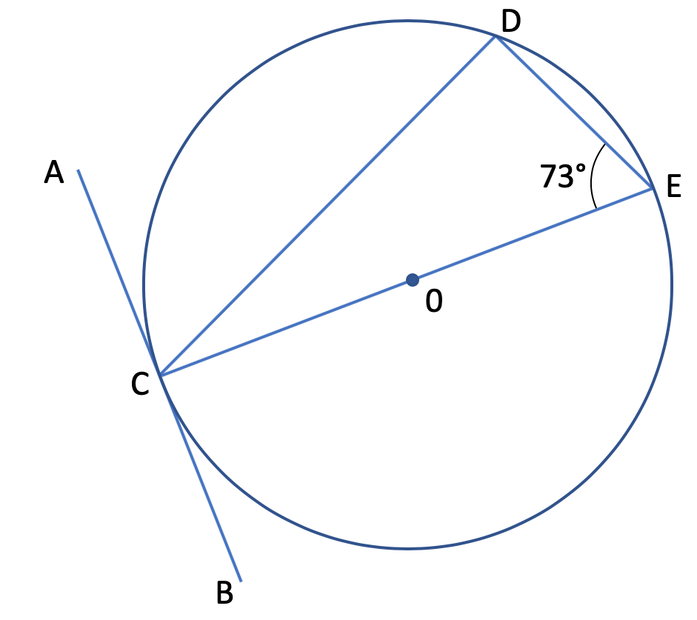
a) What is the size of angle CDE? Give a reason for your answer.
b) What is the size of angle ACD? Give a reason for your answer.
c) What is the size of angle 0CB? Give a reason for your answer.
d) What is the size of angle DCE?
3) Line AB is a tangent to the circle at C.
b) What is the size of angle ACD? Give a reason for your answer.
c) What is the size of angle 0CB? Give a reason for your answer.
d) What is the size of angle DCE?
3) Line AB is a tangent to the circle at C.
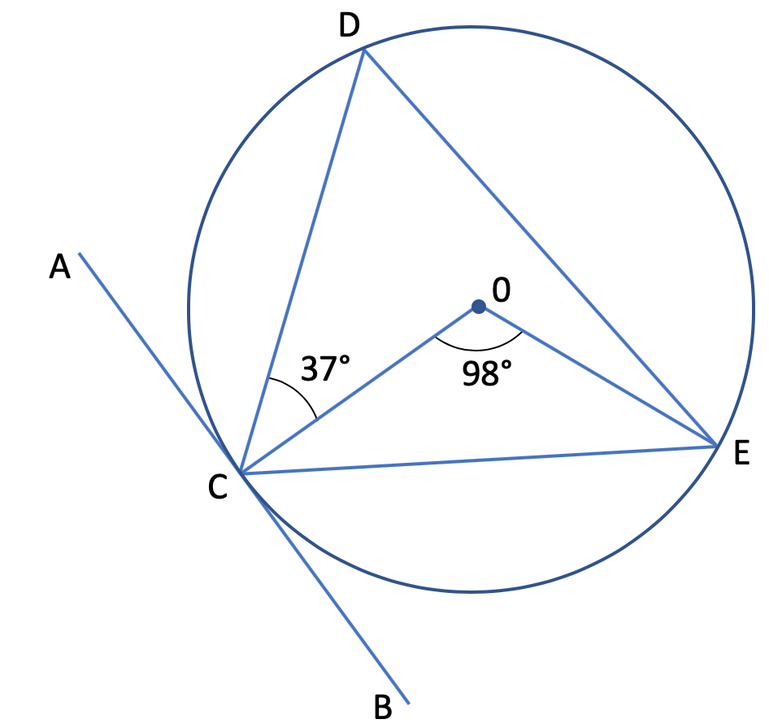
a) What is the size of angle CDE? Give a reason for your answer.
b) What is the size of angle ECB? Give a reason for your answer.
c) What is the size of angle ACO? Give a reason for your answer.
d) What is the size of angle DEC? Give a reason for your answer.
b) What is the size of angle ECB? Give a reason for your answer.
c) What is the size of angle ACO? Give a reason for your answer.
d) What is the size of angle DEC? Give a reason for your answer.