
P5 J) Acceleration – Part 1
Acceleration is how quickly the velocity of an object is changing. Velocity is a vector quantity, which means that it has both magnitude and direction. Acceleration is also a vector quantity and it is measured in metres per second squared (m/s2). A positive value for acceleration means that the velocity of an object is increasing (the object is speeding up in that direction). A negative value for acceleration means that the velocity of an object is decreasing (the object is slowing down in that direction). A value for acceleration of zero means that the object is continuing at the same velocity.
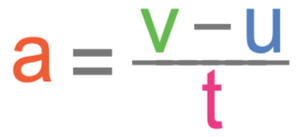
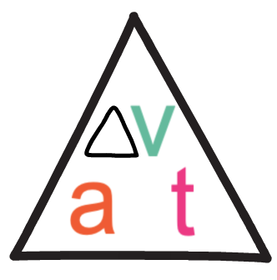
There are a few different formulas for working out acceleration and here is one of them:

A car has an initial velocity of 6 m/s. The car then accelerates uniformly and after 7 seconds reaches a velocity of 20 m/s. Work out the acceleration rate of the car.
The question tells us that the car accelerates uniformly, which means that the car accelerates at a constant rate throughout the whole of the 7 seconds.
We work out the acceleration of the car by using the formula below.

The acceleration rate is 2 m/s2. An acceleration rate of 2 m/s2 means that after every second, the velocity of the car increases by 2 m/s.
A car is travelling towards a set of traffic lights at 24 m/s. The lights go red and the driver of the car presses the brakes. It takes 3 seconds for the car to come to rest. Find the acceleration rate and comment on your answer (assume that the acceleration rate is constant)
We work out the acceleration of the car by using the same formula as the previous example. The formula is shown below.

This tells us that the acceleration is -8 m/s2. This is a negative value, which means that the car is decelerating (slowing down). So, we can answer this question by saying that the acceleration rate is -8 m/s2, or that the deceleration rate is 8 m/s2.